Foundations
Part of How business interruption insurance works for UK restaurants
How business interruption insurance works for UK restaurants
Business interruption insurance for UK restaurants pays lost gross profit after fire, flood or disease; wording and claims evidence decide the payout.
What to take away
- Business interruption insurance for restaurants pays lost gross profit and increased costs when an insured event disrupts trading.
- The usual trigger is physical damage from fire, flood or storm, though extensions can cover disease, denial of access or utility failure.
- UK claims turn on policy wording, turnover evidence and the link between the incident and lost income.
- COVID-19 disputes changed disease clauses, and cover remains separate from employers' liability and personal income protection.
How business interruption cover works
In the UK, business interruption cover is usually an add-on or a section of a commercial combined policy. The general definition explains the core idea: the insurer compares the profit you would have made with the profit you actually made.
For a restaurant, the trigger is often damage at the premises or within a radius. The insurer then adds extra costs, such as temporary kitchen hire, staff relocation or replacement stock.
The indemnity period matters. A 12-month period may not cover rebuilding a kitchen or waiting for licences. Set it around realistic repair and re-fit times, not just the remaining lease. If you are moving from a market stall to a restaurant, when a business starts needing cover sets out the triggers.
What restaurant policies usually include
| Cover section | What it usually pays for | Typical trigger |
|---|---|---|
| Business interruption | Lost gross profit and increased cost of working | Fire, flood, storm, escape of water |
| Disease extension | Loss from a listed notifiable disease or authority closure | Specific disease or local outbreak |
| Denial of access | Loss when police or authorities block access | Civil authority closure, often with a time excess |
| Loss of attraction | Reduced trade after damage nearby | Damage to a nearby venue or tourist attraction |
| Utilities extension | Loss from power, gas or water failure | Failure at the supplier or substation |
Policies differ on whether these sections are included or optional. Check the schedule for a business interruption sum insured, not just a contents limit. The figure should reflect gross profit plus a realistic uplift for wages, rent and fixed costs.
A worked example: flood and fire claims
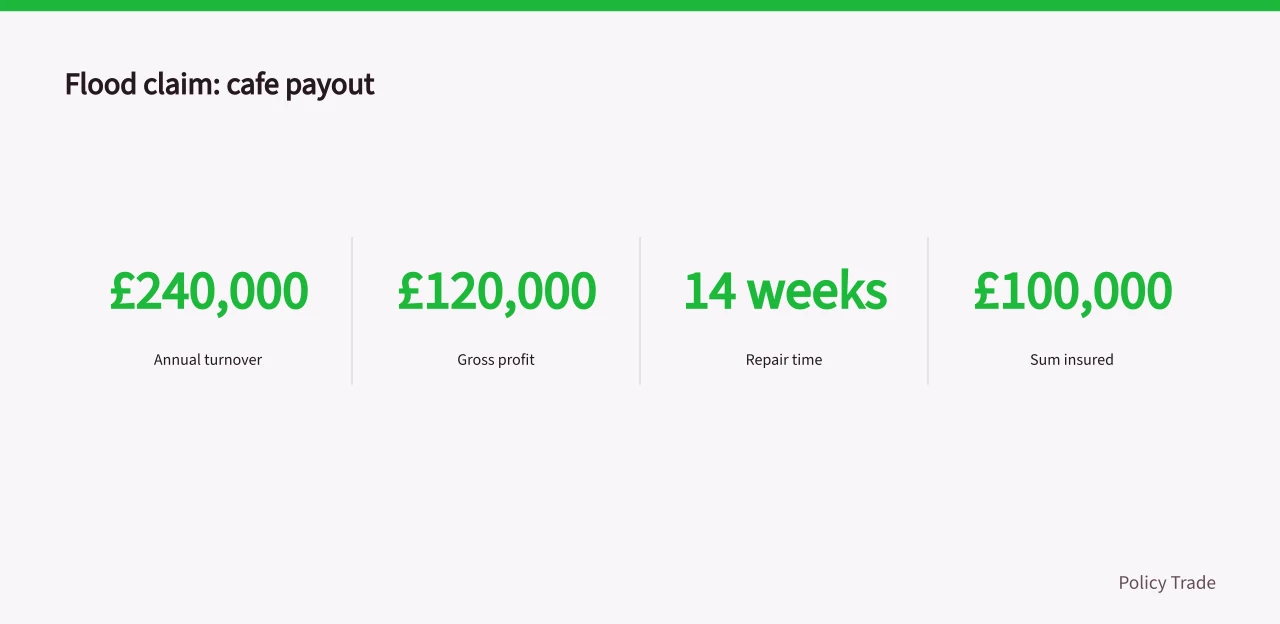
Illustrative example: a cafe with annual turnover of £240,000 and gross profit of £120,000 is flooded. Repairs take 14 weeks. The business interruption sum insured is £100,000, with a four-week excess period. Lost gross profit is £9,000 a week, so 14 weeks equals £126,000. The excess removes four weeks, leaving £90,000. Temporary premises add £12,000, but the £100,000 cap leaves £2,000 uninsured.
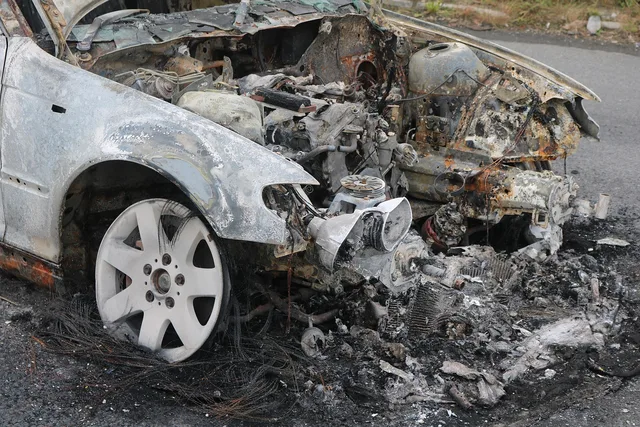
Fire claims often add building, stock and contents losses. The interruption claim then follows the repair period. Keep separate schedules so the adjuster can see each head of loss.
Why COVID-19 business interruption disputes changed policies
COVID-19 lockdowns produced many disputes about disease clauses and denial of access. In January 2021 the Supreme Court judgment in the FCA business interruption test case (FCA v Arch Insurance (UK) Ltd and others) [2021] UKSC 1 clarified how certain wordings should be read. Many insurers then tightened disease definitions or added pandemic exclusions.
The Financial Ombudsman Service publishes decisions on business interruption complaints. Check its reasoning alongside your own wording. If the incident has damaged cash flow, Finance and support for your business lists government-backed finance and support schemes, but that is not a substitute for cover.
How to make a restaurant insurance claim
- Notify the insurer or broker as soon as possible. Give the policy number and a short timeline of the incident.
- Secure the site and keep damaged items until the loss adjuster confirms you can remove them.
- Gather records: till rolls, booking systems, payroll, VAT returns, bank statements and supplier invoices.
- Build a weekly loss schedule showing expected turnover, actual turnover and extra costs.
- Agree the adjustment with the loss adjuster, then check the settlement against the policy wording.
Employers' liability is separate and compulsory for most restaurants with staff. HSE guidance sets out exemptions. Business interruption does not pay for employee injury claims.
Before accepting a settlement, compare the wording with the commercial combined insurance guide if your policy is packaged. Ambiguous wording should be read in the way a reasonable person would understand it, and individual cases need a qualified adviser to review disputed wording.
UK law adds a duty of its own. Under the Insurance Act 2015 a commercial policyholder must make a fair presentation of the risk when cover is taken out or renewed, disclosing everything a careful underwriter would want to know about the premises, the trade and previous incidents. Miss something material and the insurer can reduce or refuse the claim, so keep a written record of what you told the broker, and when.
Common questions
Does business interruption insurance cover loss of customers?
Only if the wording links the loss to an insured peril, such as damage, denial of access or a listed disease. General loss of customers from a new rival or road closure is not covered unless an extension says so.
Is COVID-19 covered by restaurant business interruption policies now?
Many policies now exclude pandemics or cover only specified notifiable diseases, such as cholera, diphtheria, legionnaires' disease, meningitis, rabies, smallpox, typhoid, food poisoning and hepatitis. Check the disease extension and any exclusion in your schedule. COVID-19 was added to England's list of notifiable diseases in March 2020, and the FCA test case showed that some disease and denial-of-access wordings respond to it, but no wording is stretched to cover a pandemic it clearly excludes.
How long do restaurant insurance claims take?
Fire and flood claims can take months because repairs and loss adjustment run together. Simple claims with clean records may settle sooner. The insurer should keep you informed, and the Financial Ombudsman Service can review delays.
Does business interruption insurance replace income protection for business owners?
No. Business interruption pays the business for an insured interruption, while income protection pays a personal income if illness or injury stops you working. A restaurant owner may need both, plus key person cover for a partner.